In this excerpt, Ileana discusses her participation with “Los Trashumantes,” the only theater group in Panama that was paid to do community theater and the Omjar Torrijos’ support for artistic culture.
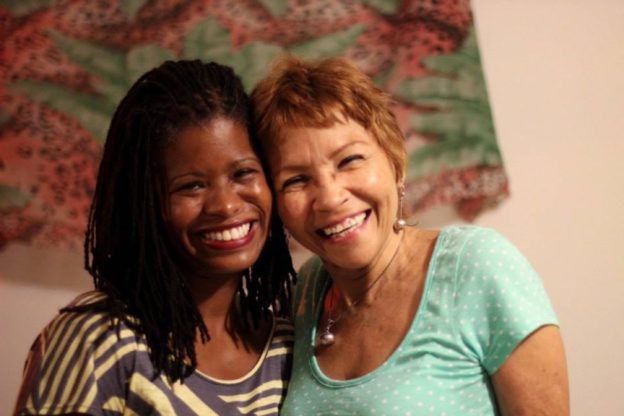
In this excerpt, Ileana discusses her participation with “Los Trashumantes,” the only theater group in Panama that was paid to do community theater and the Omjar Torrijos’ support for artistic culture.

In this excerpt, Chavarría discusses the way in which hierarchies of Congo Devils greet one another, how they are baptized within the tradition, and the importance of crossing one’s feet and “dancing” in the devil way.
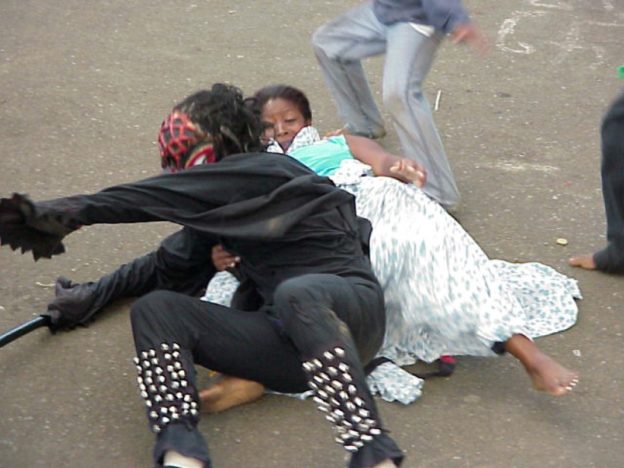
In this excerpt, Chavarría talks about the importance, for him, of playing the Devil character from “emotion” and his decision to break away from a particular ritual that marked his mentor’s embodiment of Major Devil.
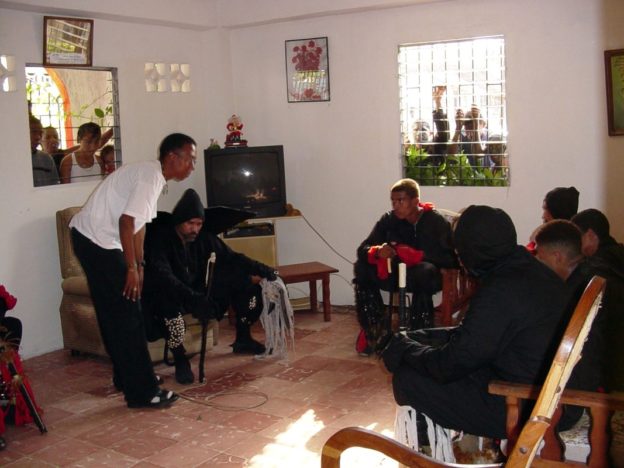
In this excerpt, Chavarría discusses the process by which he became Major Devil in the Congo tradition of Portobelo, Panama.
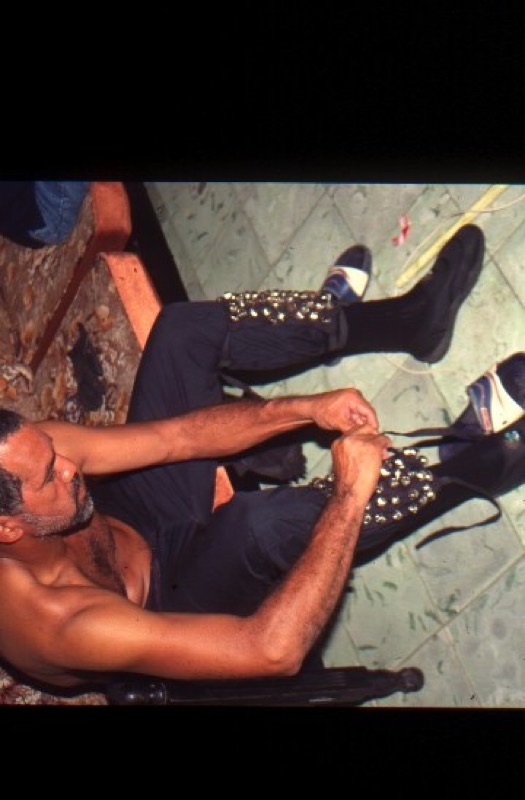
In this excerpt, Chavarría talks about his choice to play the devil role in the Congo tradition and shares his memories of how he came to play the role for the first time as a school-aged boy.
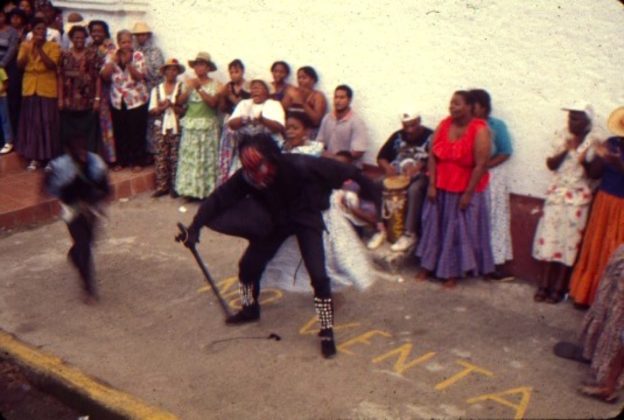
In this excerpt, Chavarría discusses the ways in which the Devil’s mask initially captured his attention and the double perspective/participant-observer position that it provides.
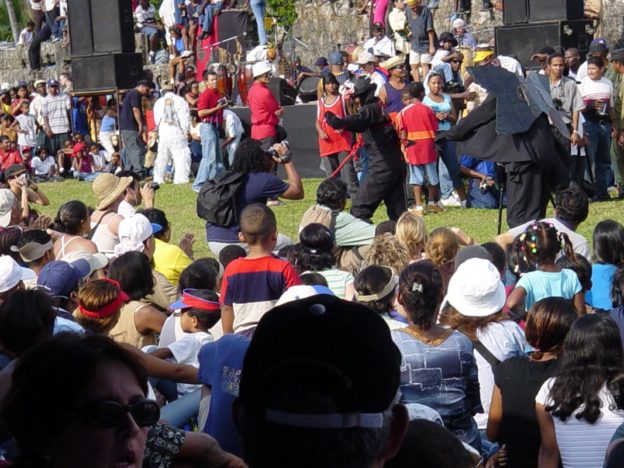
In this excerpt, Solís discusses the one-person performance that she created through her theater company to celebrate Celedonio and the Major Devil tradition of Portobelo, Panama.