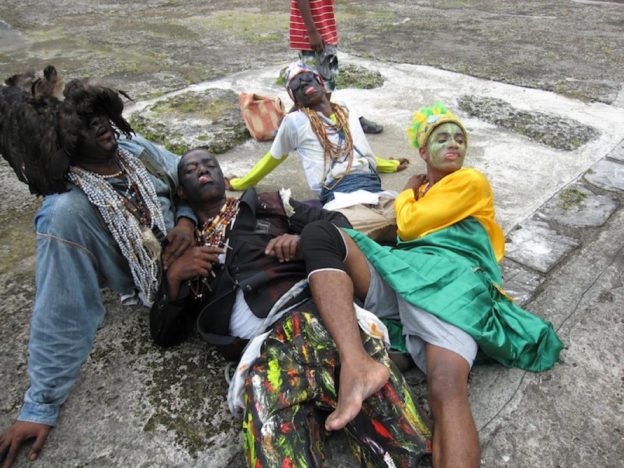
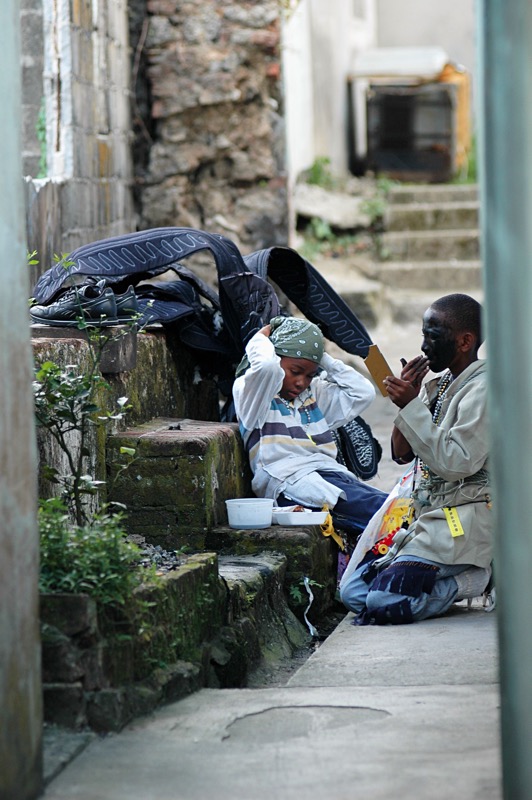
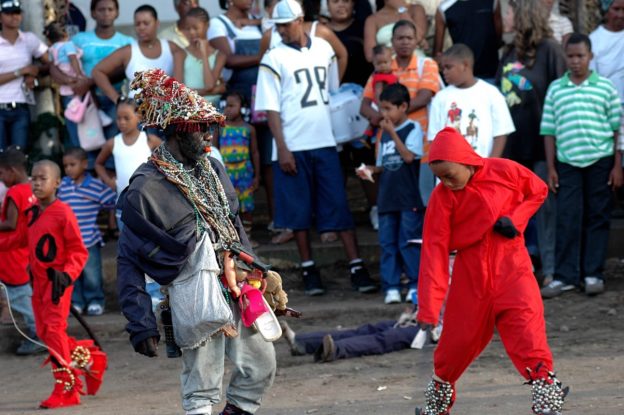
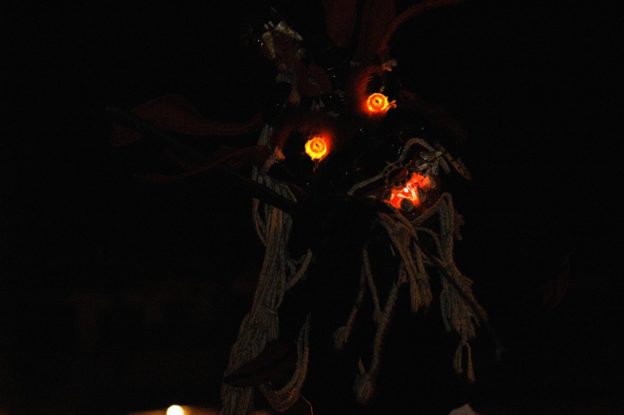
In this excerpt, Molinar discusses the process by which the Major Devil is chosen and trained for the role. He also clarifies that he ascended to the role of Major Devil in Nombre de Dios and arrived in Portobelo with the experience and title to play the role.
In this excerpt, Jiménez talks about the participation of other family members in the Congo tradition, including an older brother who has performed the role of Pajarito and a younger brother who has performed the role of devil. His father, Andrés, also performed in the role of priest in the Congo tradition and, like him, was trained in his role by Celedonio Molinar.
In this short excerpt, Molinar discusses his choice to come out as Major Devil each year even after training others to do so.
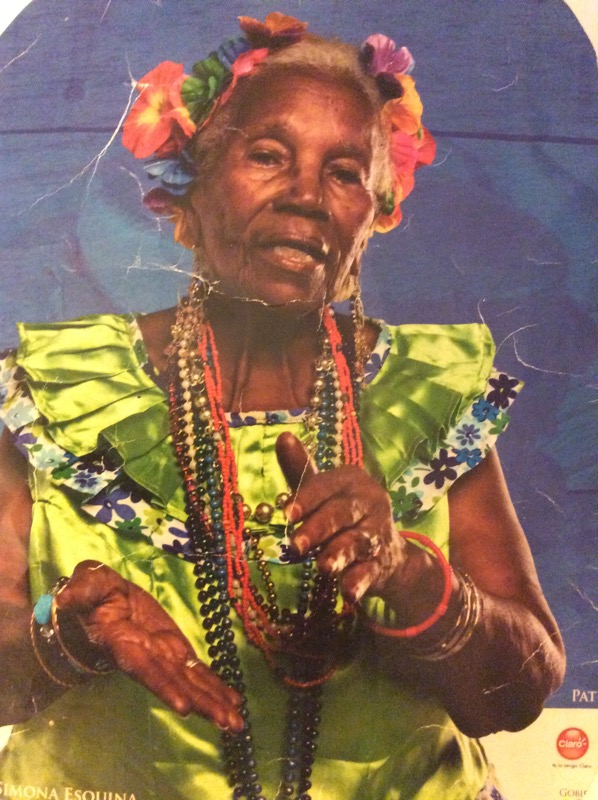
In this excerpt, Esquina discusses her pride for the Congo tradition and its importance to the towns of Panama’s upper coast.
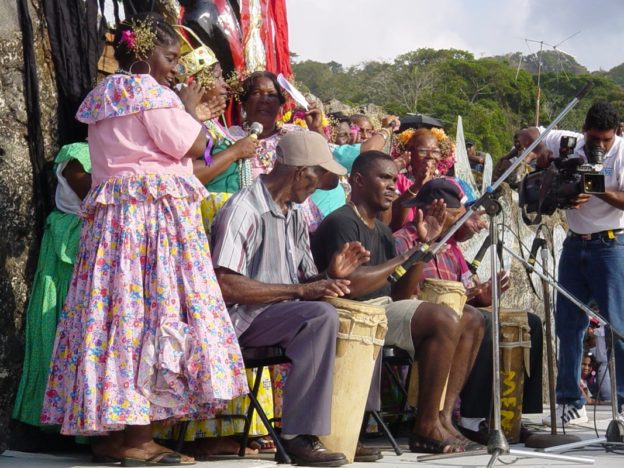
In this brief excerpt, Esquina describes the ways in which Congo season begins in Panama on the feast day of San Sebastian with the raising of the Congo flag.
In this excerpt, Esquina discusses the changes she has seen in the Congo tradition over the course of her lifetime. Specifically, she talks about the rare existence of two palacios in 2003 and the shifting commitment of Congo practitioners who once participated in the tradition exclusively and without interruption during carnival season before the road was constructed in the early 1970s, which connected Portobelo and the rest of the Coasta Arriba to the broader Republic.
In this excerpt, Esquina shares one of her fondest childhood memories, the one and only time that her mother danced in the Congo tradition.
In this excerpt, Esquina discusses the meaning and significance of the Congo tradition to Portobelo.
In this Excerpt, Esquina discusses the significance of her Congo name “Revellin.”
In this short excerpt, Molinar laments some of the escalating violence that he witnessed in the early 21st century.